

Lot 92
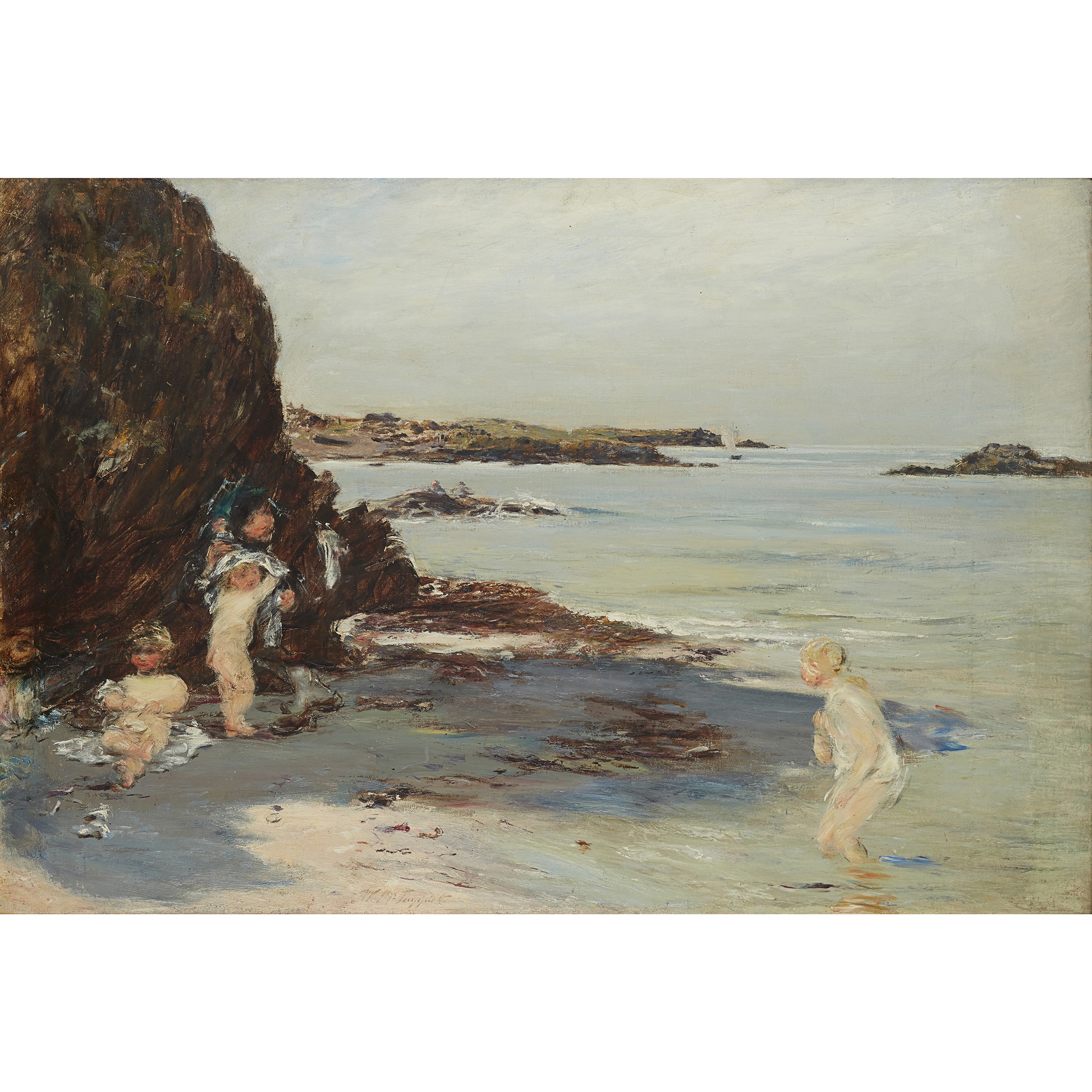
WILLIAM MCTAGGART R.S.A., R.S.W. (SCOTTISH 1835-1910)
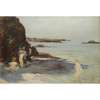
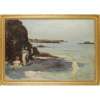
GIRLS BATHING AT THE DOUNE, MACHRIHANISH

Scottish Paintings & Sculpture | 692
Auction: Evening Sale
Description
Signed, oil on canvas
Dimensions
81cm x 122cm (32in x 48in)
Provenance
Exhibited: National Gallery of Scotland, William McTaggart, no.114
Note: This painting relates to a smaller oil on panel exhibited at the same time, no.113
Footnote
Occasionally an artist becomes inextricably linked to a specific location; a place or scene they are compelled to capture and examine anew time and again, whose genius loci inspires the purest distillation of their abilities. Machrihanish Beach on the wild, westerly tip of the Mull of Kintyre was such a place for William McTaggart.
McTaggart is noted for having developed an incredibly forward-thinking informality to his brushwork which in turn had monumental effects on his approach to landscape, belying his Victorian context and all its associated staid conventions. The constraints of technical draughstmanship were all but abandoned by the artist in favour of what Constable described as “the chiaroscuro of nature”; formality subordinated to his intuitive grasp of light and texture. This stylistic leap would reverberate influentially down the next generations of Scottish artists. McTaggart was heralded as having pushed forward against artistic tradition in a manner many thought only Continental artists capable of at this point in history.
Lyon & Turnbull are delighted to offer ‘Girls Bathing at the Doune, Machrihanish’ to market; a significant work in both scale and compositional complexity, marrying some of McTaggart’s key and most significant tropes. The location of Machrihanish was, as we have seen, of great personal significance to the artist having been born and raised nearby. It was the locus of his most successful work. He was famed for his ability to capture the quality of light and the freshness of a sea breeze. As Professor Duncan Macmillan notes in his book ‘Scottish Art: 1460-1990’ (Mainstream Publishing, Edinburgh, 1990), children were also a frequent and symbolic feature of McTaggart’s work. As Macmillan sees it, they are the (intentionally cherubic) personifications of nature and its seasons, their innocence a conduit through which we the viewers are encouraged to revel in the raw purity of the elements. This does perhaps explain why the three children appear consciously highlighted here, frolicking on the foreshore. Meanwhile, the sketchily rendered figure of their mother or guardian is visible only after a second sweep of the eye; her dark clothing causing her to recede into the deeper tones of the cliff wall; her relative obscurity emphasising the children’s ethereality. For Macmillan, in their wispy suggestiveness McTaggart’s figures are both “constantly present and constantly subordinate (to nature) in his paintings”.