

Lot 38
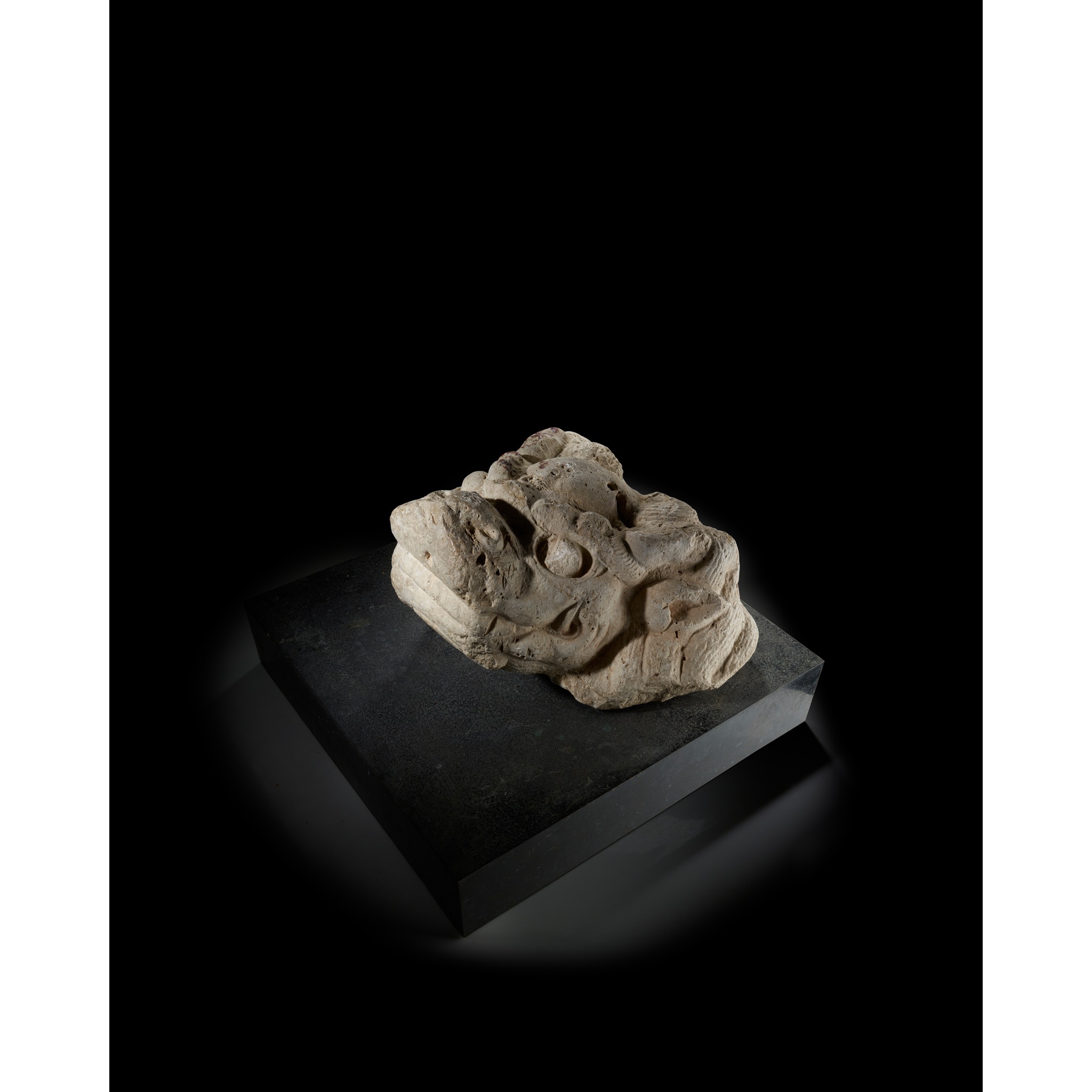
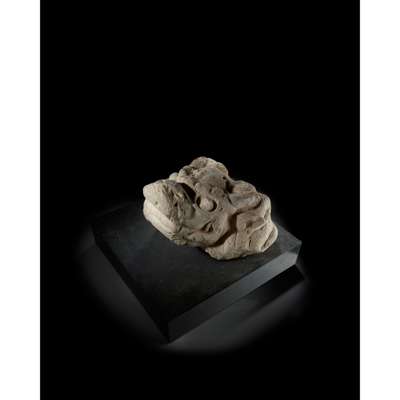
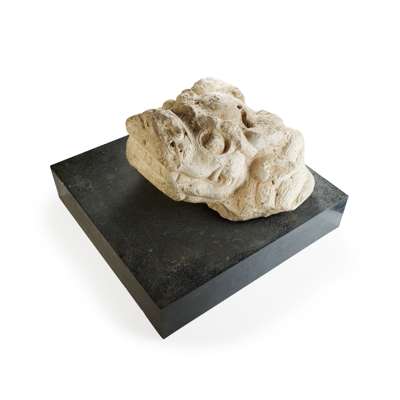
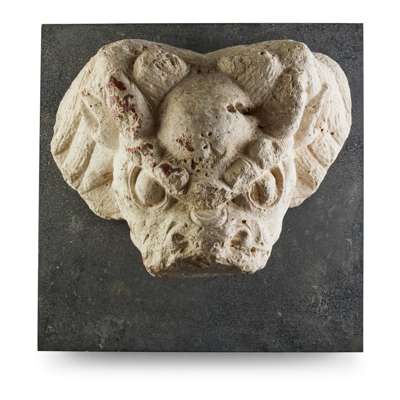
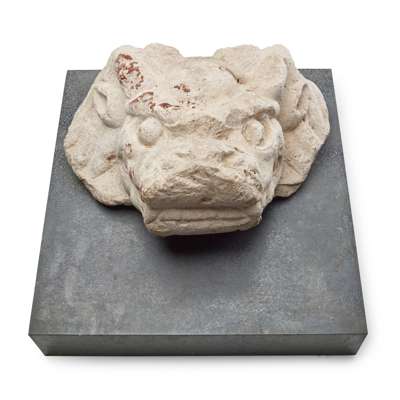
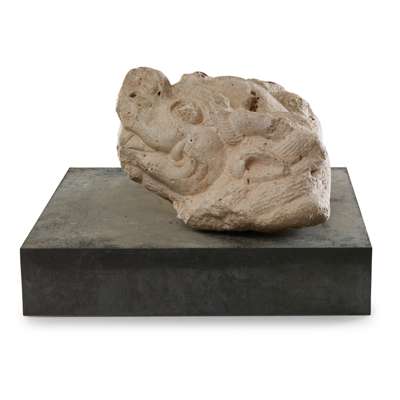
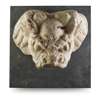
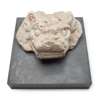
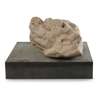
LARGE CARVED STONE HEAD OF A MYTHICAL BEAST
TANG TO MING DYNASTY


Fine Asian & Islamic Works of Art | 713
Auction: 4 November 2022 at 10:00 GMT
Description
唐至明 石雕瑞獸首
powerfully rendered with bulging eyes above flaring nostrils, pair of short horns extending from prominent bushy frowning eyebrows and perky ears tucked to the sides, its mouth agape revealing teeth, further upward-pointing fangs flanking both sides of the mouth, later mounted on a plinth
Dimensions
43cm wide
Provenance
Provenance: From a Scottish country house collection.
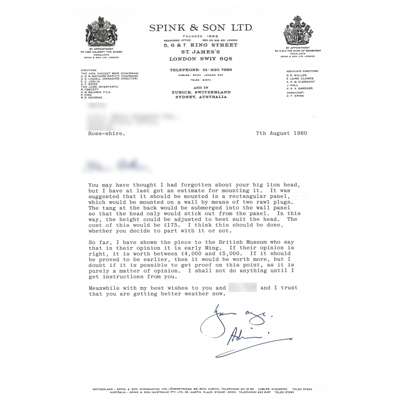
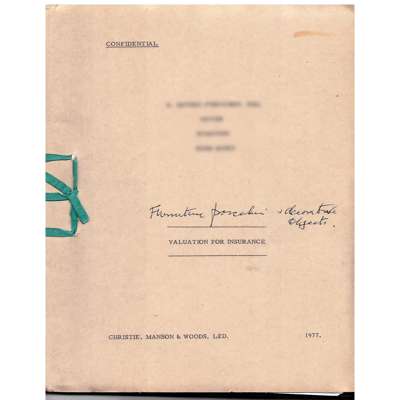
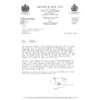
With an original letter from Spink & Son Ltd. addressed to the current owner's father [Image 1, name and address redacted]. Dated 7 August 1980, the letter proposes the way this mythical beast head should be 'mounted in a rectangular panel' as currently presented in this lot. The letter indicated Spink & Son possessed the piece at the time. They got it mounted, and even 'shown the piece to the British Museum who say that in their opinion it is early Ming (dynasty)'. This letter is signed 'Adrian', possibly Adrian Maynard, who joined Spink & Sons in 1947, where he was appointed Director from 1962 and eventually Deputy Chairman until his retirement in 1984.
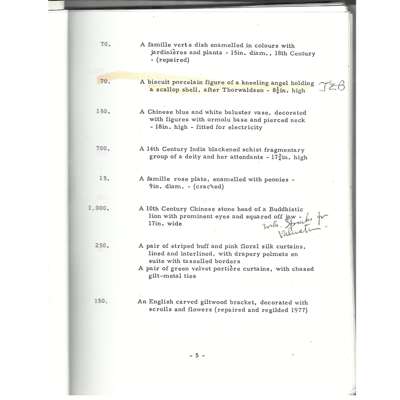
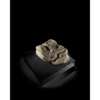
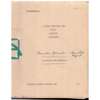
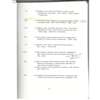
Also with a scanned copy of an insurance valuation of this Scottish country house carried out by Christie, Manson & Woods Ltd. in 1977 [image 2, cover, name and address redacted], shown on page 5 [image 3], sixth entry '(£)1,000 A 10th Century Chinese stone head of a Buddhistic lion with prominent eyes and squared off jaw - 17in. wide'.
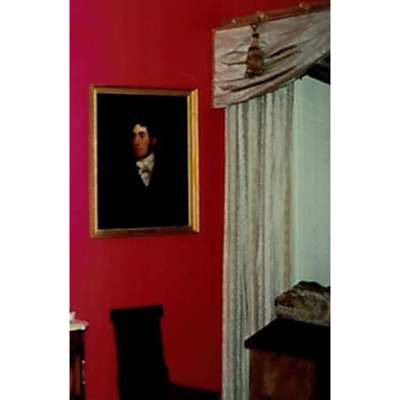
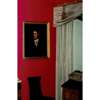
Image 4 is an old photograph that shows the mythical beast's head displayed in situ in the country house.
Footnote
Note: Compare to a related example of a taoshou tile (a sheath covering for a cantilevered beam which supports the corner), made of yellow, green, black and white glazed earthenware, and a pair of taoshou tiles, in yellow glazed earthenware, both dated to the Ming dynasty, are in the collection of the British Museum, museum no. 'OA+.151' and 'OA+.153.a-b'. Note the bulging eyes, prominent forehead, upturned snout, fangs, and the manner of the combed mane in smaller bundles, are stylistically comparable to the current stone carving of a mythical beast. For similar attributions, also see an example of a taoshou tile, dated to early Ming dynasty, excavated from the site of Bao’en si (Nanjing Porcelain Pagoda), now in the collection of the Nanjing Municipal Museum, also illustrated in Kevin McLoughlin eds., Ming: The Golden Empire (Edinburg: National Museums Scotland, 2014), pg. 12.