

Lot 14
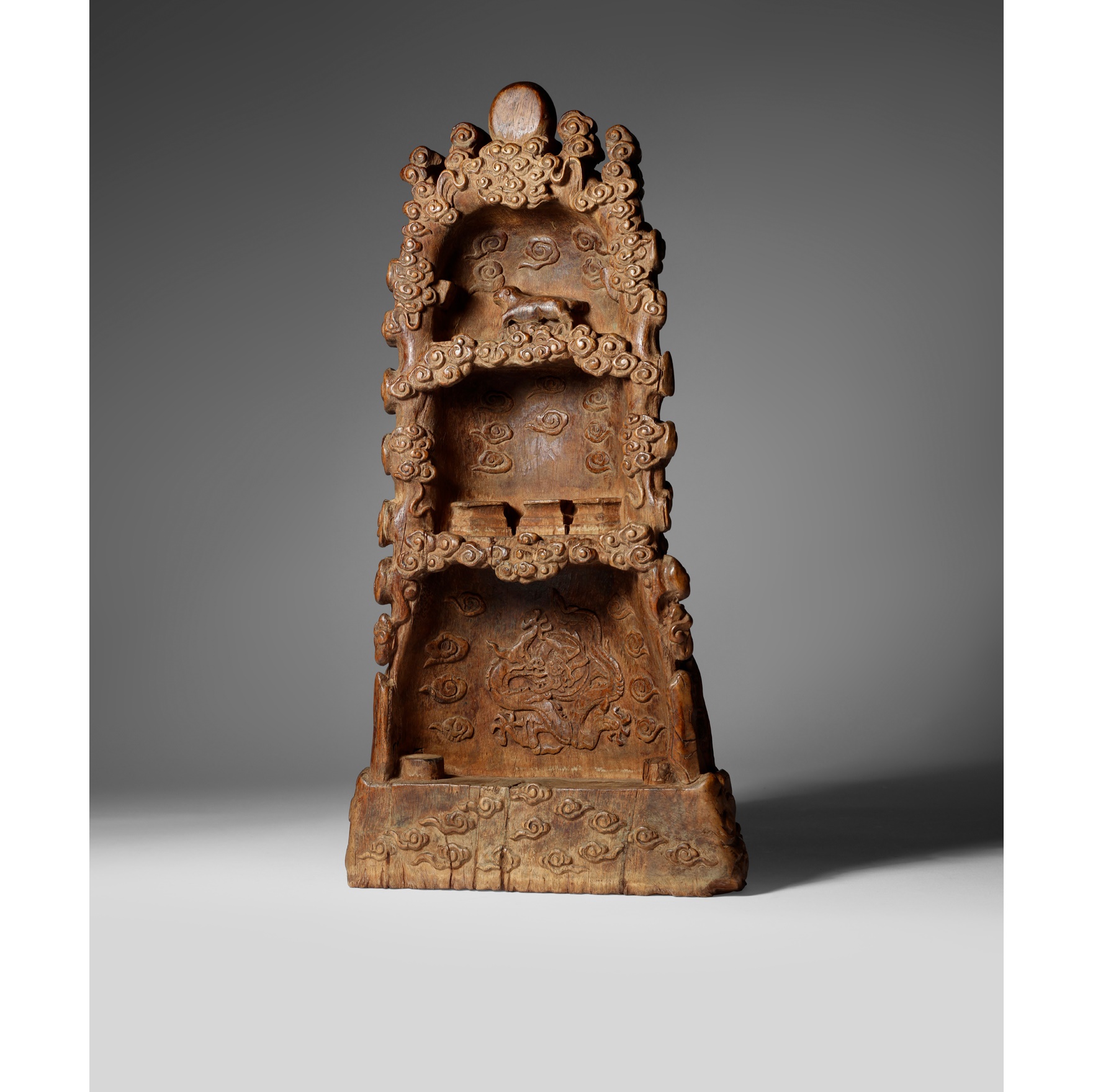
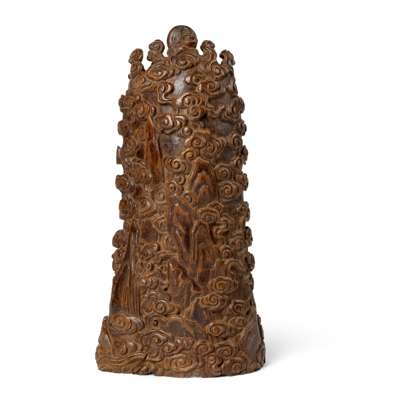
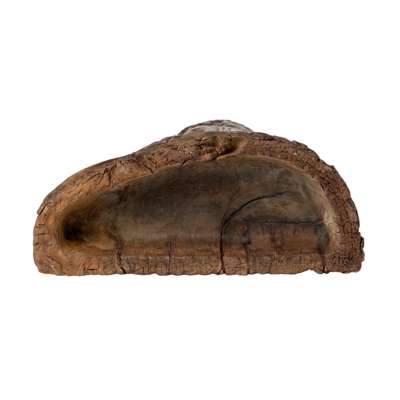
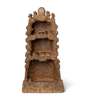
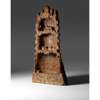
LARGE HUANGHUALI CARVED 'GROTTO' SHRINE
LATE MING TO QING DYNASTY, 17TH CENTURY
Fine Asian & Islamic Works of Art | 713
Auction: 4 November 2022 at 10:00 GMT
Description
明末清初 黃花梨靈山洞窟型祥雲拱日紋三層佛龕
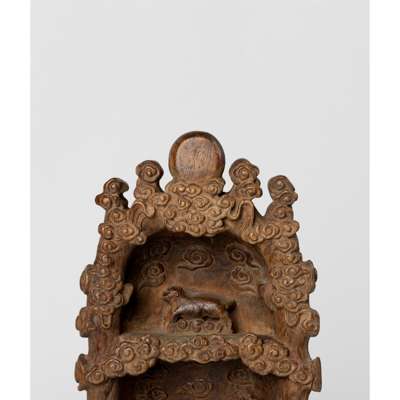
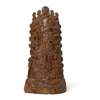
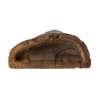
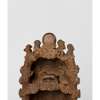
of crescent-form towering and tapering up, three tiered and domed niches, the wall of the lower tier with a coiling five-clawed dragon in low relief, the middle with three stepped pedestals, the upper a profile of a mythical beast in high relief, the exterior carved overall in mid-relief with auspicious ruyi-head clouds, the back with occasional hills peeking through, the top surmounted by a sun flanked by two pairs of clouds
Dimensions
20.5cm wide x 41cm high x 8cm deep
Provenance
Provenance: Formerly in a private English collection
Footnote
Note: This unusual carved wooden shrine has a highly comparable example in design with a Longquan celadon-glazed shrine, now in the collection of the British Museum, museum no. 1929,0114.1. It is larger in size (50.3cm high) and dated to the auspicious day of the Chu Festival (Dragon Boat Festival) in the Bingxu year of the Yongle reign, 1406AD.
With all the gilded deities intact, one could assume the low circular plinths flanking the lower niche in this lot would similarly contain a pair of protectors guarding the central main deities; the three stepped-pedestals with seated Daoist deities in the middle niche; and on the top niche, a mighty figure, possibly Zhenwu, would mount the mythical beast as vahana.[1]
Shrines in the form of a grotto are more common in porcelain form, especially from the Longquan kiln produced in the Ming dynasty than wooden sculptures. Compare to a similar three-storey Buddhist and Daoist temple, dated to early Ming dynasty 14th-15th century, was sold at Christie's Hong Kong, 30 May 2022, lot 2819; a further comparable 'grotto' shrine with Guanyin, with similar ruyi clouds and sun disc, was sold at Christie's London, 18 May 2012, lot 1175.
1. See the discussion of this Longquan celadon-glazed shrine, in Jessica Harrison-Hall, Catalogue of Late Yuan and Ming Ceramics in the British Museum (London: The British Museum Press, 2001), pp. 499-500.