

Lot 42
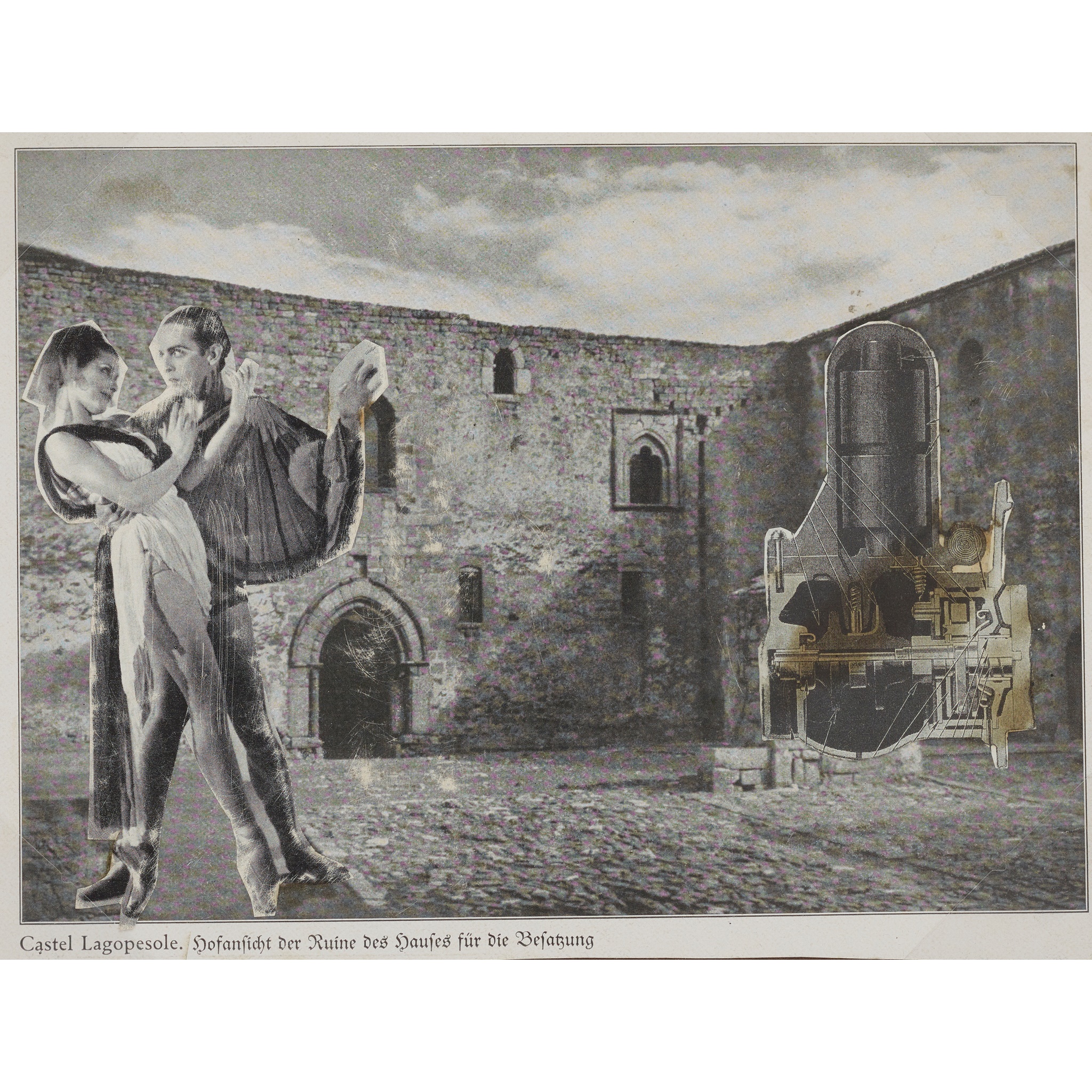
EDUARDO PAOLOZZI K.B.E., R.A., H.R.S.A. (SCOTTISH 1924-2005) §
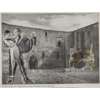
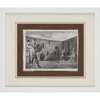
UNTITLED (CASTEL LAGOPESOLE), 1958
Contemporary & Post-War Art // Prints & Multiples | 687
Auction: Contemporary & Post-War Art
Description
Collage
Dimensions
14.5cm x 19.5cm (5.75in x 7.75in)
Provenance
Provenance: The artist's 1958 sketchbook
Footnote
Note: Paolozzi’s collages are today recognised as having anticipated the concerns of Pop Art and its obsession with mass media, technology and found imagery. He is regarded as the UK’s own important precursor and conceptual link to the seismic 20th century art movement.
Collage has been of great importance to the practise of many of the 20th century artistic greats; with examples including the ground-breaking Dadaist imagery of Kurt Schwitters, Picasso’s early Cubist works, and the output of Surrealists including Max Ernst.
Fascinatingly, Paolozzi’s collage practice began during his boyhood years in Edinburgh; his collections of cigarette cards and comics ending up pasted in scrapbooks. Indeed, it is his passion for this activity that is said to have inspired his resolve to become a professional artist. Scrapbooking remained an integral lynchpin of his practice which he maintained throughout his studies at The Slade (1946-47), as well as during his years in Paris between 1947 and ’49. It was here that he produced his famous images taken from the magazines of American ex-servicemen featuring advertisements, cartoons and machine parts, combining them to form witty and bizarre tableaus.
In 1952, the decade from which our collage dates, Paolozzi gave a seminal presentation of popular culture at the ICA in London which featured pages of his collage work, creating an exhibition as ground-breaking as it was iconoclastic.
The magpie-like practice of collage found its way into all areas of his work, from the cut and paste layer-building involved in his screen-printing process (a technique very deliberately appropriated from the advertising industry and elevated by Paolozzi into artform), to the methodologies behind the designs for his famous public murals, notably Tottenham Court Road’s mosaic masterpiece. Even his sculptures in plaster and bronze were formed by the maverick process of assembling component parts taken from casts of mundane, everyday objects.
We see then, that as well as being totally fundamental to his art practice, Paolozzi’s work in collage is arguably the most important and exciting aspect of his wide-ranging and non-conformist output.